The Wake-Up Call That Changed Everything
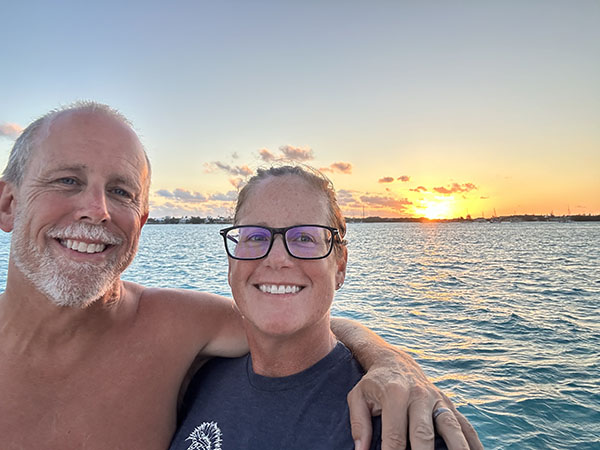
I'm Rob Edgcombe, and this is the story of how my wife Emily and I discovered that losing a six-figure corporate job was probably the best thing that ever happened to our family—even if not everyone in the family agrees with that assessment yet.
In August 2022, Ford Motor Company laid off 3,000 employees, including me. Not for poor performance. Not because the company was struggling—they were posting billions in profits. Simply because eliminating "unnecessary roles" would make them leaner and more profitable. The irony? They fired us for doing exactly what they had asked us to do.
That moment became our catalyst for breaking free from conventional living and embracing a minimalist lifestyle that prioritizes experiences over possessions. The change has forced us all to escape toxic routines, spend significantly more time outdoors and seeking adventure, and paradoxically, has created more quality family time than when we were all living under the same roof 100% of the time.
The Dream That Was Actually Ours (Just Accelerated)
Before the layoff, Emily and I appeared to have it all. She was thriving as a Nurse Anesthetist at the University of Michigan, I was established in IT strategy at Ford, and together we were raising six wonderful children in our blended family. Our income was substantial, our expenses equally robust—college tuition, travel sports, music lessons, the works.
The truth is, we already had this dream. We'd been planning for early retirement in 2028 or 2029, right after our youngest graduated high school. We'd consulted financial advisors, shifted investments, and begun trimming expenses while maintaining our lifestyle. We were already plotting our escape to spend more time doing what we loved—chartering sailboats in the Caribbean and diving pristine coral reefs.
But a troubling realization had crept in: we were spending 47 weeks working to fund 5 weeks of actually living. Ford's decision didn't give us a new dream—it accelerated the timeline for the dream we already had.
The Minimalism Awakening: Downsizing by 90% to Upgrade Our Lives
When Ford's decision forced us to reevaluate everything, we didn't just trim around the edges. We made a radical choice: we downsized our entire life by over 90%—and discovered that less truly is more.
This wasn't about organizing our closets or decluttering a room. This was about fundamentally redefining what we needed to live well. What we discovered was remarkable: by cutting back on space and possessions, we actually upgraded our lifestyle. We now travel to amazing destinations and spend every day doing things that financially wealthy people pay enormous sums to experience just a few days out of the year.
Material Possessions to Experiences
Out: Multiple vehicles, oversized home, attics, garages, and sheds full of "someday" items
In: Dive and snorkel gear, kite boards, and clothes you can pack in one bag
Fixed Expenses to Freedom
Eliminated: Mortgage, property taxes, insurance on things we didn't truly need
Redirected: Those funds toward location independence and experiential wealth
Consumer Culture to Intentional Living
The process was cathartic and challenging in equal measure. Selling possessions we'd spent years accumulating felt like shedding layers of someone else's definition of success. Each item we released was a step toward discovering who we actually were beneath all the stuff.
Redefining Family: Raising Kids Outside the Box
One of our biggest concerns was raising our children in this non-traditional, transient lifestyle. How do you provide stability while embracing location independence? How do you maintain connection while living unconventionally?
The answer surprised us: extended support networks and modern technology became our superpowers.
Grandparents, siblings, and close friends didn't just tolerate our unconventional choices—they became integral to our children's upbringing through both physical presence and electronic check-ins. Our kids gained:
- Independence, accountability, and self-reliance from learning essential life skills earlier
- Deeper relationships with extended family members who became more involved in daily life
- Resilience and adaptability from navigating different environments
- Global perspective from experiencing diverse cultures firsthand
We discovered that older kids don't need parents to be in the room as much as they need them to be accessible for help. Rather than destabilizing our children, minimalist family living taught them that security comes from relationships and skills, not stuff.
Escaping a Culture of Conflict
Our journey isn't just about downsizing possessions—it's about escaping a culture that seems increasingly prone to angry and fearful emotions that promote dissonance and conflict.
North American culture had convinced us that:
- Success meant climbing corporate ladders we didn't want to climb
- Security came from employer loyalty (clearly a myth)
- Happiness required ever-increasing material accumulation
- Adventure was something you squeeze into vacation days
We chose instead to create our own culture—one free from social criticism and social biases, where people can feel comfortable in their own skin, whoever they are, figuratively and literally. On our boat, we can build an environment built on:
- Time wealth over material wealth
- Authentic relationships over networking
- Daily adventure over weekend escapes
- Acceptance and personal choice over conformity
Taking Control of Our Destiny
Leaving traditional employment meant one fundamental shift: pursuing income streams that connect with our passions while insulating our lives from the uncontrollable decisions of the corporate world.
The goal isn't just financial independence—it's about taking control of your own destiny. It's ensuring that your work advances you and your family rather than being used solely for developing the wealth of others. It's about building economic resilience through work that aligns with your values and lifestyle.
When corporate leaders can eliminate thousands of jobs to boost profits without regard for the human cost, the illusion of employment security crumbles. True security comes from diversifying your capabilities and building income that serves your life rather than consuming it.
The Ripple Effects of Authentic Living
Simple living doesn't mean easy living, but it means intentional living. Every decision we make now passes through filters that didn't exist in our corporate life:
- Does this align with our values?
- Does this increase or decrease our freedom?
- Are we choosing experiences over possessions?
- Are we modeling authentic living for our children?
- Are we working for ourselves or enriching others at our expense?
The Decision Point
We're not claiming to have all the answers. Some days are harder than others. Some decisions don't work out. But every morning, we wake up knowing that we're living according to our values rather than someone else's definition of success.
Breaking free from ordinary isn't a destination—it's a daily choice to prioritize authenticity over expectation, experiences over possessions, and freedom over security theater.
The question isn't whether you can afford to make radical changes to live more authentically. The question is whether you can afford not to. When unexpected events force you to reevaluate everything, you have a choice: return to what was comfortable but unfulfilling, or use the disruption as a gateway to the life you actually want.
"What unexpected catalyst might be waiting to transform your life? Sometimes the best things happen when we stop fighting the current and start sailing with the wind."
This is just the beginning of our story. The events and thinking that brought us to this decision point are only the first chapter. How we're actually making it work, the daily realities, the challenges and victories—those are stories for future posts.
Follow our journey as we continue learning, stumbling, and discovering what it really means to break free from the ordinary.